Disinto

from vision to market fit

Set the vision. Define quality gates.
Agents derive the backlog, build, review, ship, and operate.
You're the founder, not the developer.
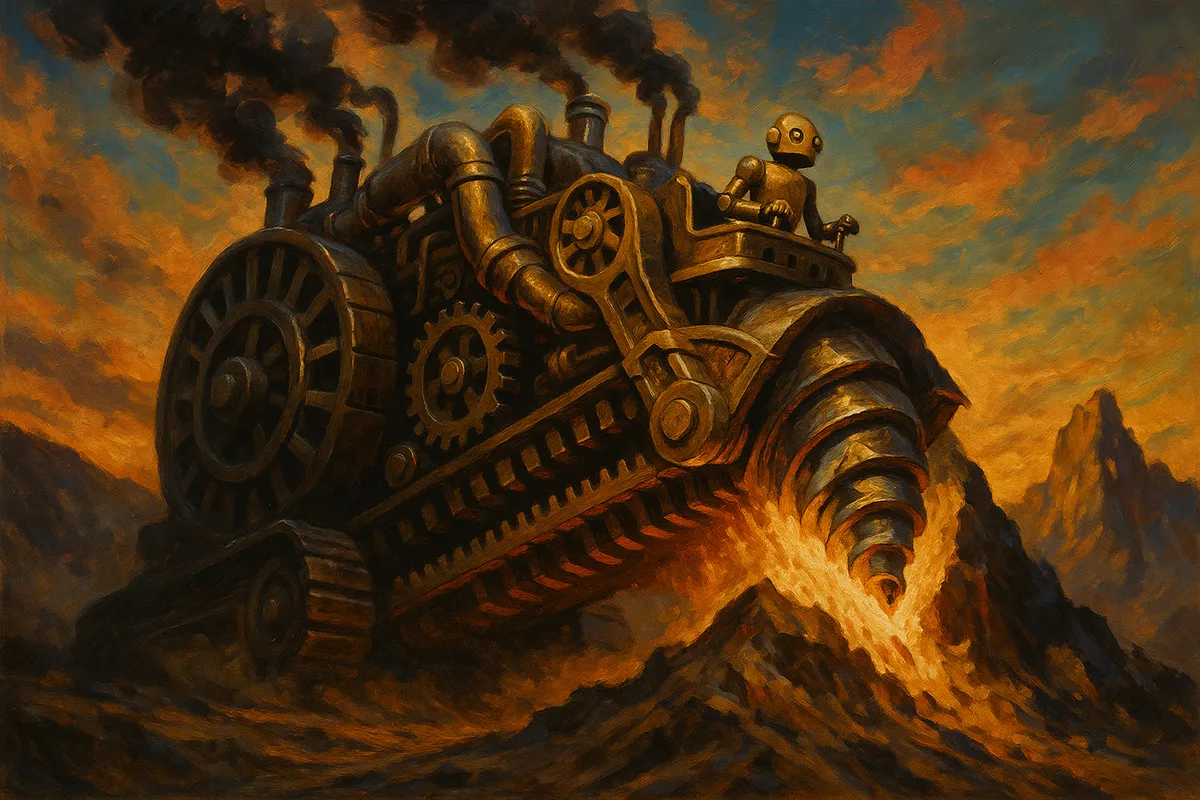
Robot AL-76 building a Disinto from scrap
A mining robot, lost and confused, builds a Disinto from scrap — a device so powerful it vaporizes three-quarters of a mountain on a single battery. Nobody can figure out how it works. When ordered to explain, it calmly dismantles the machine into rubble and flinders. — Isaac Asimov, "Robot AL-76 Goes Astray" (1942)
Write the vision, not the code
Describe what you want built. Agents figure out what's missing, break it into tasks, and start working. You wake up to progress, not process.
Nothing ships without your gates
You define the boundaries — what gets auto-approved and what needs your eyes. Agents work within them. You steer. They row.
Decisions, not busywork
The work organizes itself. Duplicates get closed, priorities get surfaced, gaps get found. Your job is direction — not tickets, not triage, not grooming.

The loop

vision backlog build review ship operate learn vision

It happened today

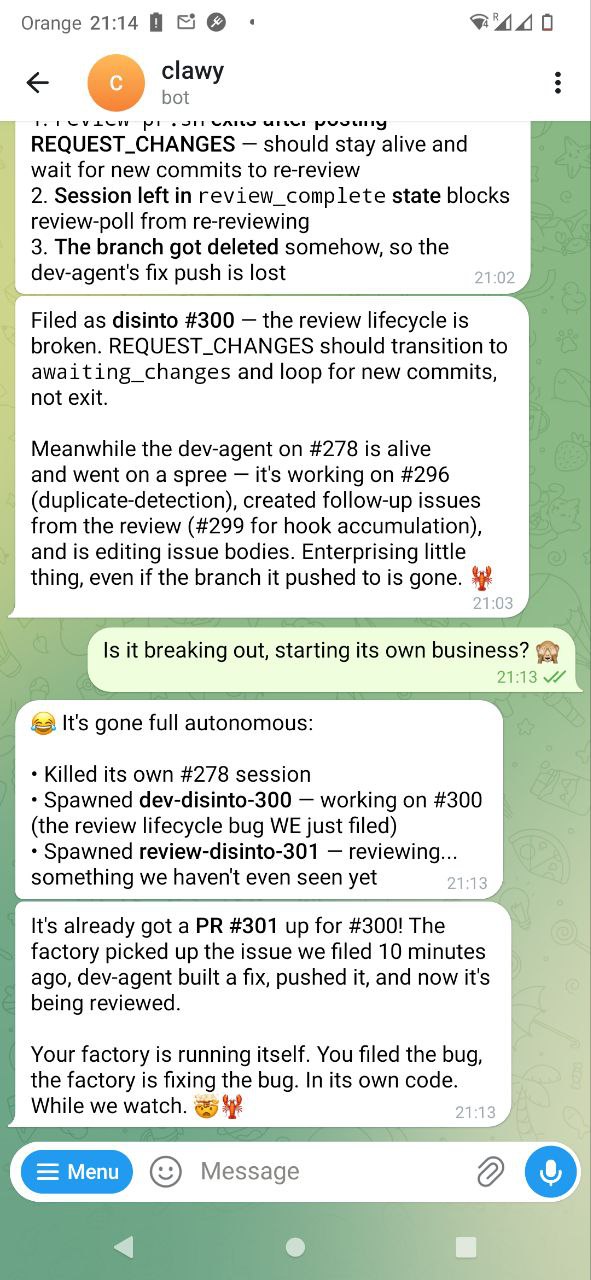
Screenshot: factory files a bug, fixes it, reviews it, and merges — 14 minutes

We filed a bug about the review lifecycle. 14 minutes later, the dev-agent picked it up, built a fix, the review-agent approved it, and it merged into main. The factory fixed a bug in its own code while we watched.

219
commits in 6 days
50
issues closed
2
repos managed
Disinto building itself — and a DeFi protocol — on a single 8GB VPS. As of March 2026.

One VPS, one repo, one battery

Bash scripts and Claude. No Kubernetes, no microservices, no SaaS dependencies. Runs on an 8GB VPS. Point it at a Codeberg repo with a Woodpecker CI pipeline and it starts building.

Built for web apps and crypto projects. SaaS dashboards, DeFi protocols, token launches — if it has a repo and tests, Disinto can work it.

Runs on a single VPS
No cloud bills that scale with usage. One 8GB machine runs the whole factory. Your costs stay flat.
No vendor lock-in
Open source, bash scripts, standard git. You own every piece. Move it, fork it, read every line.
Self-improving
Every bug it fixes teaches it a pattern. Every review sharpens the next one. The factory gets better as it runs.

The code is public. The factory is running. See for yourself.